Put yourself in this situation: you have a growing e-commerce business, sales are going well and orders keep coming in. But, as happens in any online store, returns start to appear. Yes, “the dreaded ecommerce returns”. At first, they feel like an obstacle: extra costs, time invested and, sometimes, frustrated customers. But here’s a secret: if you manage them correctly, you can turn them into a competitive advantage.
Returns in an e-commerce aren’t just a logistical challenge — they’re an opportunity to stand out. A clear and transparent policy, an agile process and effective communication can transform a bad experience into something positive that builds customer loyalty. Ready to learn how to do it? Let’s go!
Create a good return policy in ecommerce
Imagine one of your customers: they’ve just received their order, but the product isn’t what they expected. What will they do next? Look for your returns and refunds policy. If they can’t find clear information, they may lose trust and, worse, never buy from your store again. The key? A well-designed policy that solves problems and builds confidence.
Define who assumes the costs
Returns in ecommerce are a delicate topic, especially when it comes to costs. Under the General Law for the Defence of Consumers and Users (LGDCU), you are not required to cover return costs, but you must explicitly inform customers of this in your return policy.
Many customers value free returns, and large e-commerce companies offer them as a competitive advantage. But let’s be honest: it’s not always feasible for every business. If you decide that the customer should cover the cost, be honest and transparent from the start.
Set specific deadlines
The regulation mentioned establishes a minimum period of 14 days to return a product, known as the right of withdrawal. Offering a longer period, such as 30 days, can be a strategy to improve your customers’ experience and differentiate yourself from competitors. Whatever deadline you choose, include it in your e-commerce return policy and make sure it’s clearly visible.
Make your policy easy to find
Your return policy must be accessible at all times. Think of strategic places: your website footer, product pages or even purchase confirmation emails.
Tip: Use friendly language. Instead of cold legal text, write as if you were speaking directly to your customers.
How to manage ecommerce returns: step by step
Having a good policy is a great first step, but it’s not everything. The next challenge is its correct implementation, which will be crucial for offering a competitive after-sales service. How can you make the process efficient for you and simple for your customers? Here’s a practical plan:
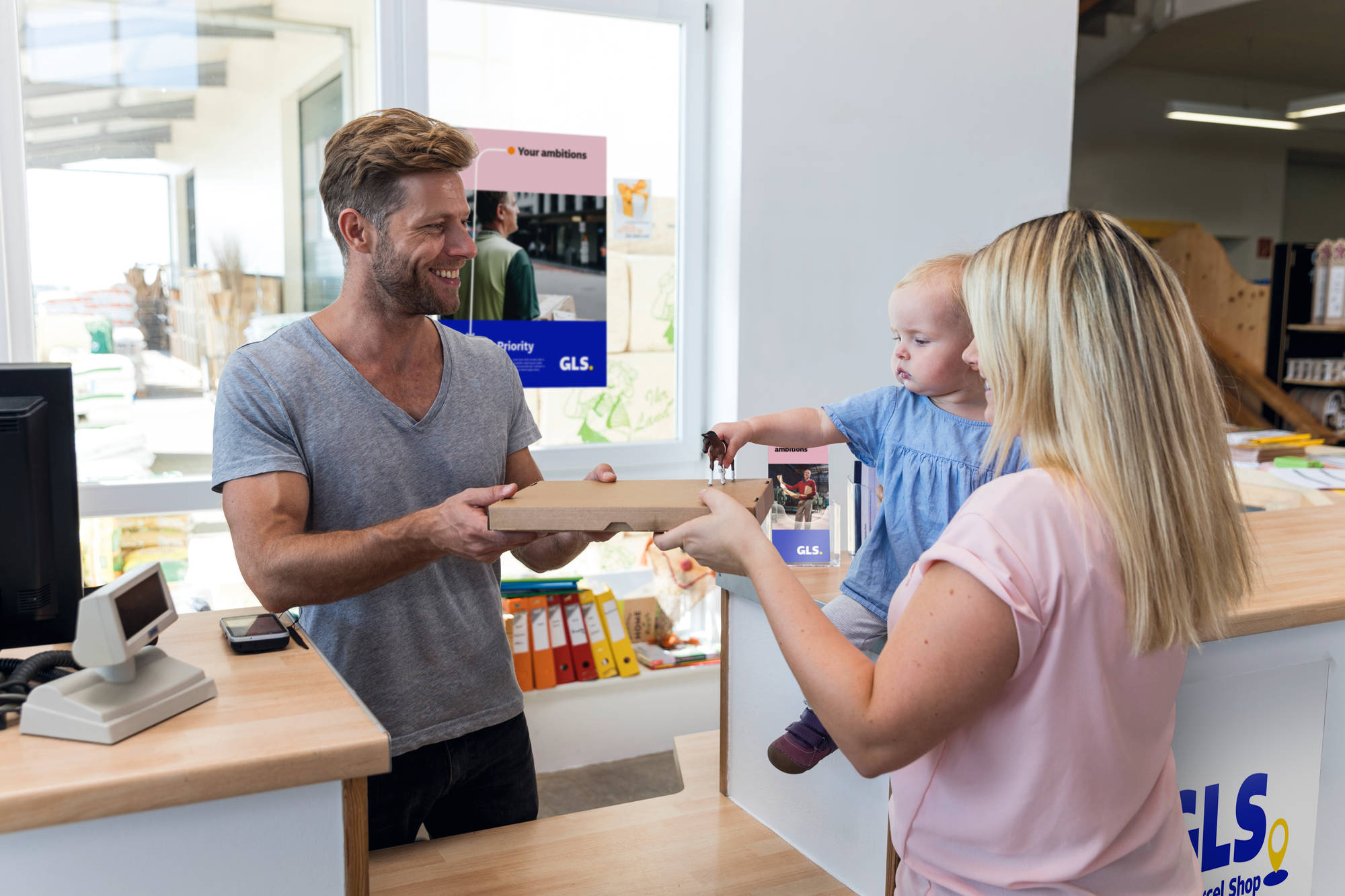
- Accessible return points: Convenience points like Parcel Shops let your customers drop off products close to home without wasting time. GLS, for example, has more than 7,700 Parcel Shops in Spain and over 94,700 in Europe, making direct returns easy without visiting a post office. A Parcel Shop is a pickup, delivery and return point that works as an alternative to home delivery. These are establishments (such as stores, stationery shops, petrol stations or supermarkets) that partner with courier companies to facilitate parcel handling.
- QR code: With just a QR code sent to the customer’s email, they can choose the nearest convenience point to make the return. Easy and with no need to print labels.
- Real-time tracking: Identification labels linked to a tracking number ensure complete traceability of the package during the return process, giving your customer peace of mind.
- Process returns quickly: Handle refunds or exchanges efficiently. Customers value speed, and this can turn a negative experience into a positive one. For all these reasons, outsourcing returns management is highly advisable.
Tips to avoid returns in ecommerce
Although managing returns efficiently is essential, the ideal scenario is to prevent them. The return rate is one of the biggest challenges online businesses face. According to a Deloitte study, products purchased online are three times more likely to be returned compared to those bought in physical stores.
Reducing ecommerce returns not only improves profitability but also enhances your brand perception. But how can you reduce the number of returns? Here are some key strategies:
Provide detailed and realistic descriptions
Incomplete or confusing descriptions are one of the main reasons for returns in online shopping. Make sure to include precise measurements, materials, true-to-life colours and any detail that helps the customer make an informed decision.
Add effective size guides
In fashion, sizing is one of the top causes of returns. A practical solution is to include a detailed guide with measurements in centimetres, examples and clear tips. If possible, add photos of real customers or models with different body types so buyers know exactly what to expect.
Use honest, high-quality photos
The famous “expectation vs. reality” effect can damage your e-commerce’s reputation. Show real photos of the product, taken from multiple angles. If possible, include videos or photos in context so customers see the product “in action”.
Proactive customer service
Did you know many returns can be avoided simply by answering questions before the purchase? Implement live chat or a FAQ system. Solving doubts early can make a big difference.
Secure packaging
Secure packaging reduces the risk of damage during transport.
Best packaging practices to avoid ecommerce returns
Common recommendations include:
- Select resistant packaging: Use high-quality boxes suited to the product’s size and weight.
- Secure the internal content: Filling materials like paper or bubble wrap protect the product during transport.
- Label correctly: Place readable labels on flat surfaces to facilitate tracking.
Ecommerce reverse logistics: optimise the process
We know managing returns can be challenging, but you don’t have to do it alone. Ecommerce reverse logistics is key to simplifying the process, reducing costs and improving the customer experience. GLS offers solutions specifically designed for managing e-commerce returns, helping you save time and resources while strengthening customer relationships. These are the Return Services, where GLS makes things easy for both the e-commerce business and the customer.
This is where GLS’s ShopReturnService comes into play. Instead of the customer dealing with complicated labels or crowded post offices, they simply receive a QR code or return label by email. Then, all they need to do is visit one of the more than 7,500 Parcel Shops in Spain (or any of the more than 82,000 in Europe if you sell internationally) and drop off their package. It’s that simple.
For you, this means fewer emails from confused customers asking about returns and fewer logistical issues. And for your customer, it means a smoother, frictionless shopping experience that increases trust and the likelihood of repeat purchases. Because an easy return process isn’t just an extra service — it’s a strategy for customer loyalty. With GLS ShopReturnService, returns stop being a problem and become an opportunity to grow your business.